A Full Product Matrix: Higer's Road into European Passenger Transport
03 November 2026
The European market
This September, Higer made its debut at the 16th International Bus & Coach Show in Madrid, Spain. But what the Chinese bus builder brought to southern Europe's most influential industry event was not a single showpiece model — it was a complete product matrix spanning long-distance coaching, city buses, intercity transport and a common chassis platform.
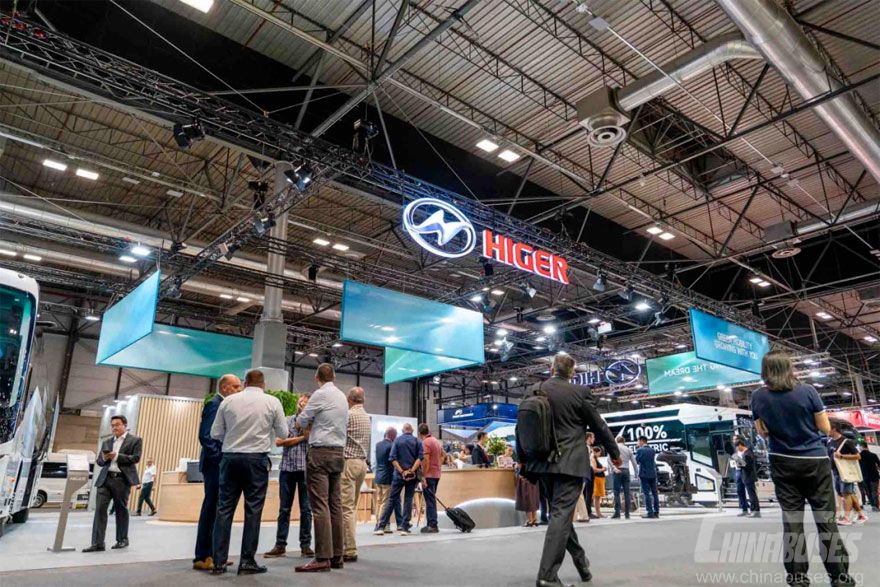
Behind that matrix lies one of the most pragmatic readings of the European market a Chinese bus brand has ever produced: Europe's electric transition is not a single, uniform question. Line by line, the infrastructure, operating radii and cost structures differ sharply, and so do the problems operators actually face. Higer's answer was not to throw one "do-it-all" vehicle at every challenge, but to hand the choice back to the operator. The flagship diesel touring bus V13 and the pure-electric intercity bus FENCER f6 are the two most telling expressions of that approach.
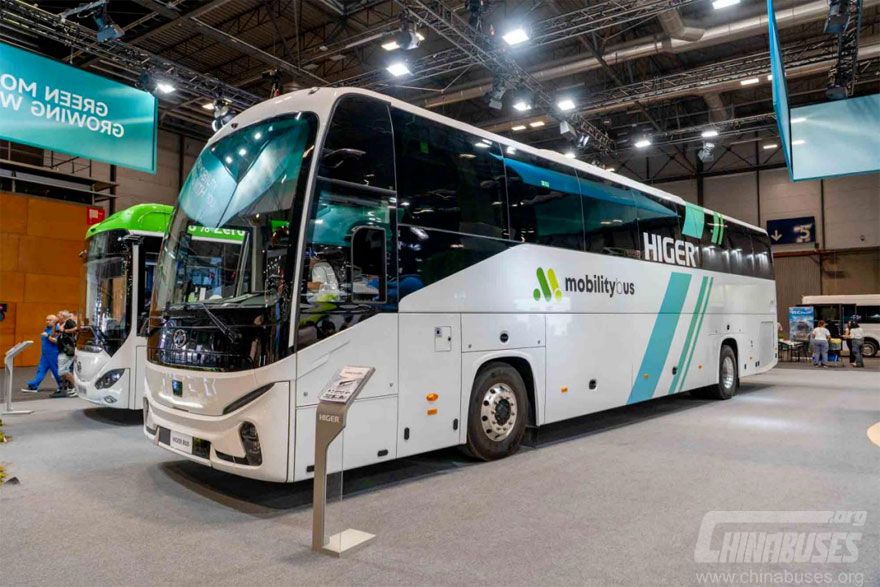
Higer V13 diesel bus
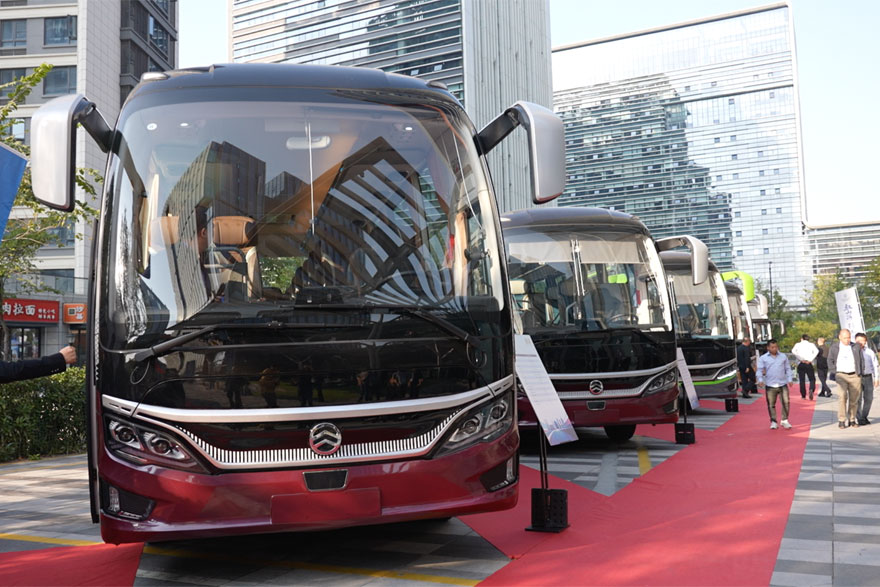
The V13 is impossible to ignore on Higer's stand. Beneath its 13.15-meter body and 3.85-meter high-top profile sits a 490 hp Cummins diesel engine, with 59 seats and a 13.5 m³ luggage hold. At a moment when the European bus industry has piled nearly all its narrative weight onto batteries and range, Higer placed a diesel touring bus front and center as "the undisputed protagonist."
What is the logic? According to the European Automobile Manufacturers' Association (ACEA), by 2030 European intercity and touring coaches will require nearly 30,000 charges a day — and around 98% of them will take place well away from main routes. Until the charging network truly reaches those places, a diesel coach that does the touring-coach job to the highest standard is more practical for an operator than an electric showpiece that asks them to buy into charging anxiety first.
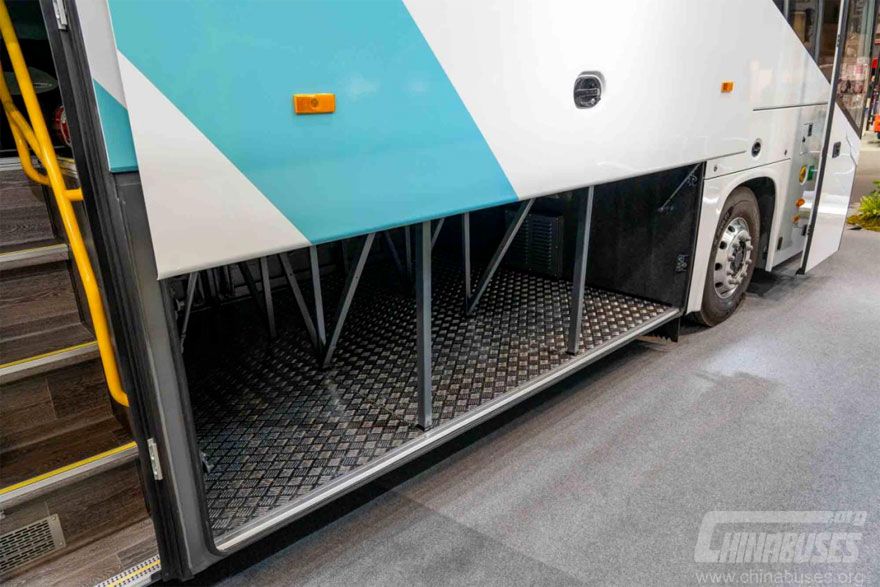
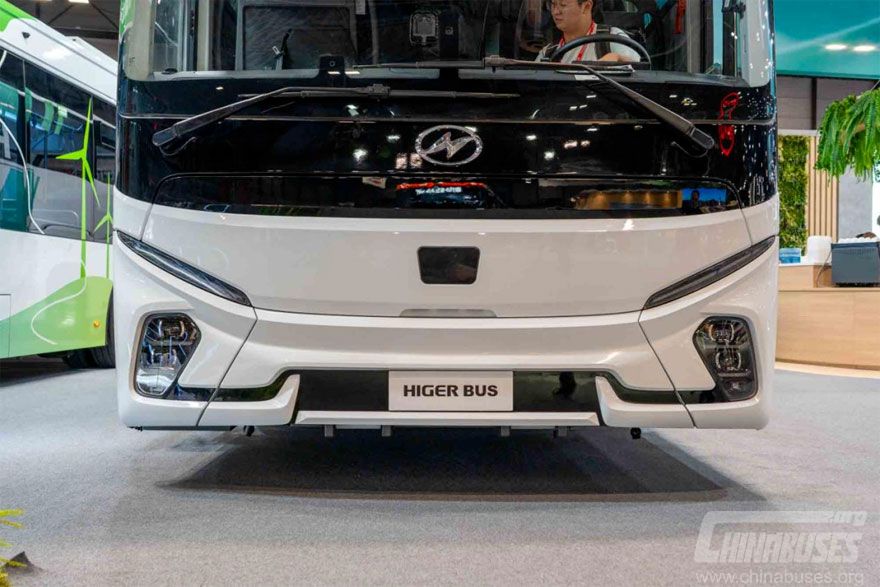
The full-LED lighting and lightweight body design point to more than just a sharp silhouette. At full load — 59 passengers and 13.5 m³ of luggage — making every drop of diesel count is the real equation this class of vehicle has to solve. A 13.5 m³ luggage compartment puts the V13 at the top of the 13-meter touring segment, and both the regularity of the compartment's internal shape and the actual pass-through of the door openings are excellent. In real operation, passengers do not carry laboratory-standard cases; they carry irregular shapes and unevenly distributed weight. It is against this practical reality that Higer refined the V13.
The cabin materials also lean toward "long-haul endurance": premium carpeting, amber ambient lighting and ergonomic seats. The goal is not to make visitors gasp on the show floor, but to leave passengers who have sat for eight-plus hours with a memory of "quiet" and "tired-free."
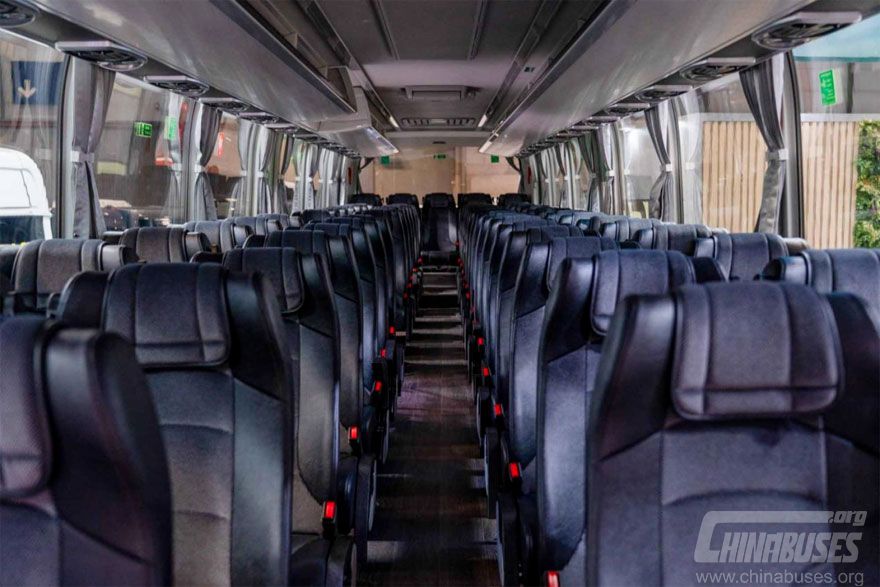
The aisle-side seats slide laterally. At full load they widen the usable space per passenger; at lower loads they open up the central aisle. That means the same vehicle can shift between tour groups, private charters and scheduled long-distance services without forcing a one-time trade-off between aisle efficiency and passenger space.
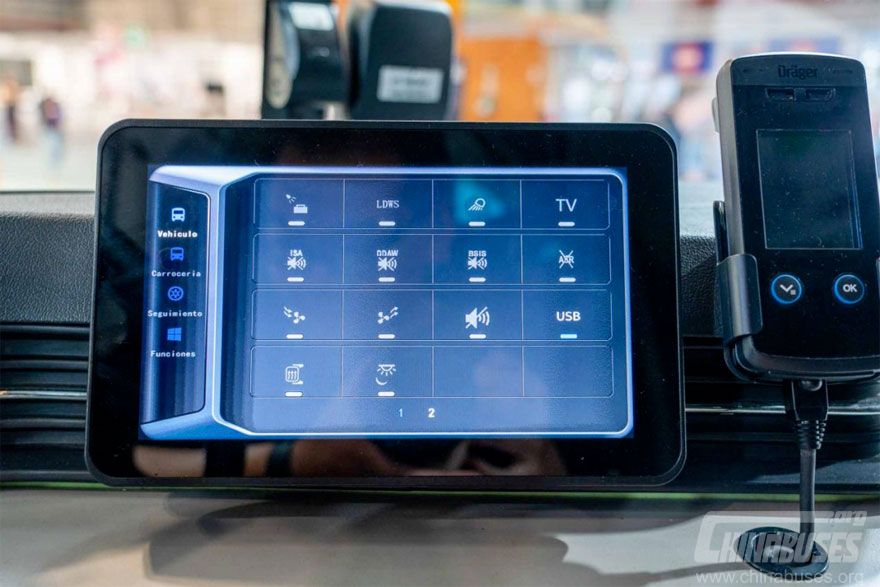
A 10.25-inch digital instrument cluster and floating touchscreen keep speed, energy consumption, navigation and vehicle status within the driver's line of sight — no need to look away from the road. Voice control handles the infotainment system and the heating and air conditioning, and there is no wall of physical buttons behind the wheel, nor any burying of everyday functions inside sub-menus for the sake of "tech appeal." For a coach that switches between tour routes and charter jobs, with a driver who may face three very different groups of passengers in a single day, whether the human-machine logic in the driver's area can survive the wear of repeated operation matters more than screen size itself.
FENCER f6
Moving from the V13 to the FENCER f6 demands a completely different way of thinking. The V13 answers routes "where the charging network hasn't arrived yet"; the f6 confronts a calculation that has already begun. For intercity and metropolitan-commuter corridors, the question is no longer whether to electrify, but whether — once charging conditions are in place — a pure-electric intercity bus can deliver simultaneously on availability, charging efficiency and total cost of ownership.
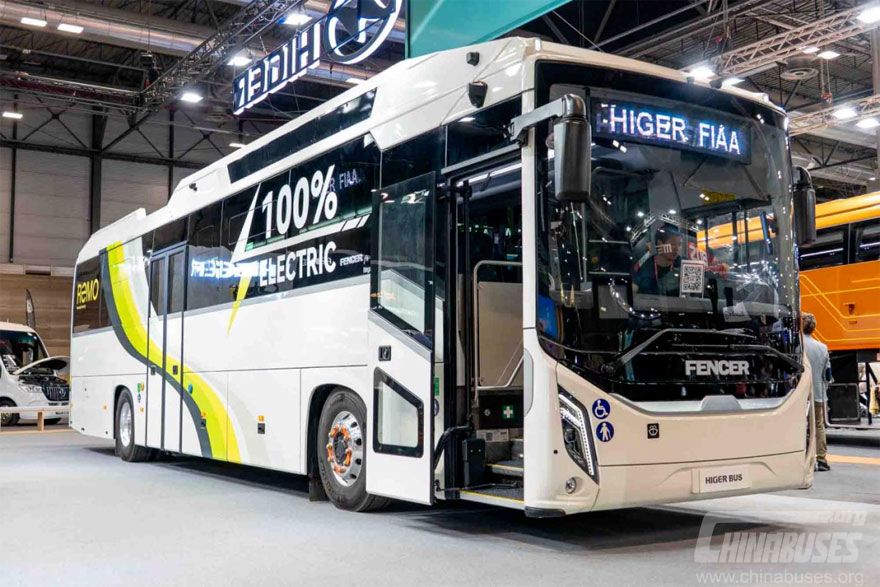
The FENCER f6 is a 13-meter pure-electric intercity bus with 53 standard seats and a range exceeding 400 km. It is a Class II vehicle, designed from the ground up for intercity and metropolitan-commuter services — not a stretched or downgraded city-bus platform. Higer's official specification page fills in the detail: 13,000 mm length, 2,550 mm width, 3,600 mm height, a 440 kWh battery, motor ratings of 155 kW/160 kW continuous and 248 kW/260 kW peak, CCS Type 2 charging with a charge time of under three hours, a maximum passenger capacity of 102 and a seating configurable up to 63. The spec sheet itself reveals a thoroughly practical design philosophy.
Key configuration one: the charging phase
The f6's first critical feature is hidden in the charging phase. The fundamental difference between intercity service and city transit is that an intercity vehicle shuttles across different route segments every day, and its dwell-time charging windows are fragmented. A driver cannot simply park at a charger and wait while the battery warms to its ideal charging temperature. The f6's battery pre-heating and pre-cooling functions adjust the pack to the temperature window for high-power charging before the vehicle even reaches the depot. What they shorten is the real waiting time at every charging stop — not the peak-power figures achieved under ideal lab conditions.
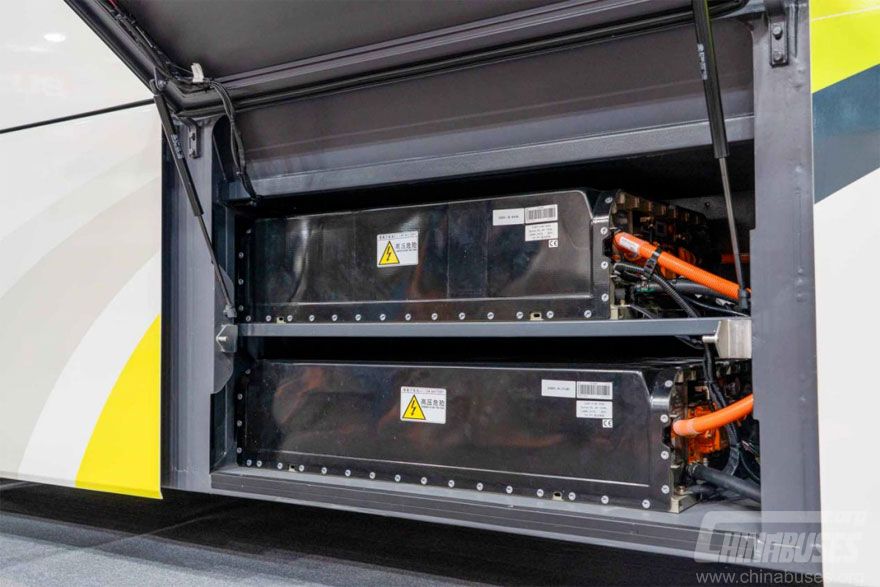
The f6's true intercity adaptability lies precisely in how efficiently it uses the daytime charging window, and pre-heating and pre-cooling exist to serve that window. For an intercity route that needs one or two mid-route top-ups a day, every minute saved at the charger translates directly into scheduling slack. And for an operator, scheduling slack is the real cost of an extra run — or one fewer standby vehicle in the fleet.
Key configuration two: inside the body
The f6's second key feature lies within the body itself. A highly integrated high-voltage system consolidates components such as the roof-mounted electrical center into fewer physical nodes, cutting the length of high-voltage wiring and the number of connectors — and trimming away the most unpredictable slice of maintenance cost over a long operating life. For an intercity electric fleet, the complexity of the high-voltage system is not just a matter of procurement price; it shows up in every insulation fault, every aging connector and every wire-harness failure that means time in the workshop and lost revenue. Each step up in integration removes another set of intervention points over a three- or five-year holding period.
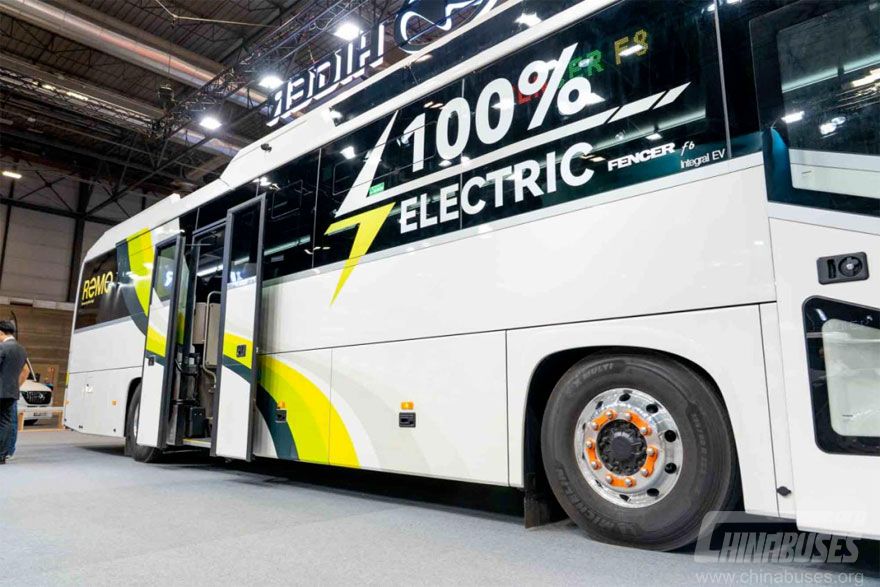
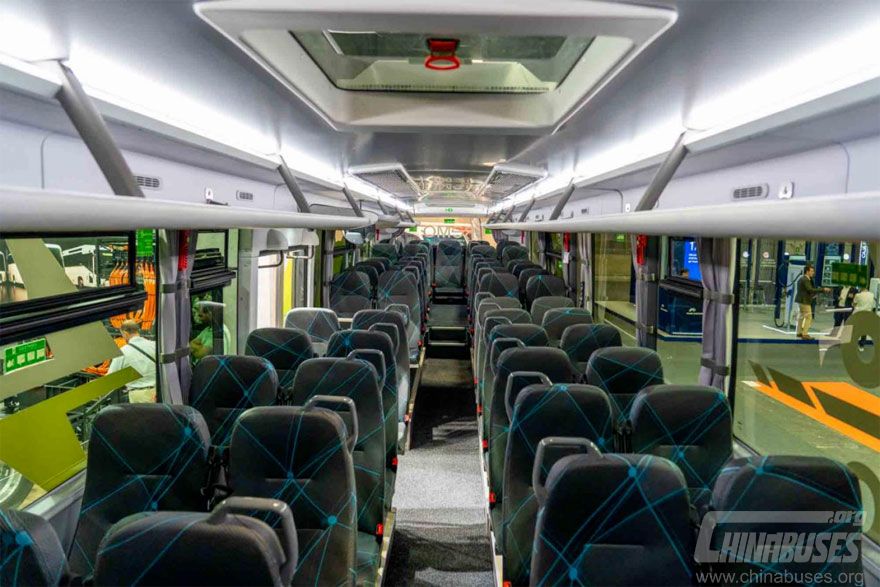
The integrated platform also pays a dividend in space: within the 13-meter body, the f6 pushes maximum capacity to 102 passengers with up to 63 seats, while keeping the luggage hold generous by intercity-bus standards. In other words, it has not squeezed passenger or luggage space to an unacceptable degree just to make room for the batteries.
The ADAS advanced driver-assistance system is not an option on the f6 — it is a baseline feature integrated into the vehicle's electronic architecture. Intercity routes run at higher average speeds than city transit, with drivers operating for long stretches across motorways and suburban expressways, so the safety systems need to be calibrated with the powertrain and braking systems from the factory, not bolted on later as hardware that never talks to anything else. Natively supported and deeply integrated, that approach gives the f6 a strong foundation in active safety.
The V13, with its diesel powertrain and fully equipped long-distance touring package, holds the ground where charging infrastructure has not yet arrived. The FENCER f6, with its intercity-specific integrated e-drive, charging thermal management and high-voltage integration, attacks the intercity and metropolitan-commuter segments where charging conditions are mature but ordinary electric city buses are not up to the job.
There is no sense in which one replaces the other. Their very coexistence is Higer's honest reading of Europe's fragmented reality: the electrification of European intercity and touring coaches is not a single question awaiting one "universal product" to answer. City-bus electrification rates are climbing, but once you cross the city boundary, higher average speeds, longer duty cycles, tighter turnaround times and a severe shortage of charging nodes along main routes push operational complexity to another order of magnitude.
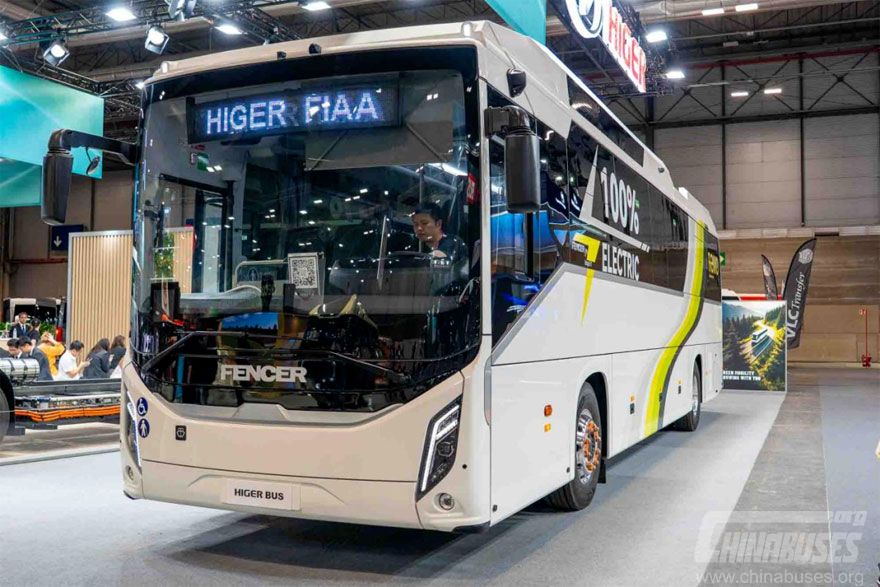
The V13 and the f6 share no common powertrain — but they do share a common product philosophy: handing the choice back to the operator who faces real routes, real passenger flows and real charging conditions every day. For a Chinese bus brand to talk about "customer thinking" in Europe, the danger is reducing it to an adjective on a spec sheet. Higer chose instead to split it into two deliberately divergent vehicles: diesel stays diesel, electric stays electric. Pre-heating is the few minutes saved at every stop; high-voltage integration is the fewer workshop visits over years of ownership. As Chinese bus makers evolve in Europe from "participants" into "definers," the real dividing line may not be who unveils the longer-range battery first — but who first learns to define the product in the customer's operating language.
Source : www.chinabuses.org
Editor : Sissi
Views:2546
Share :