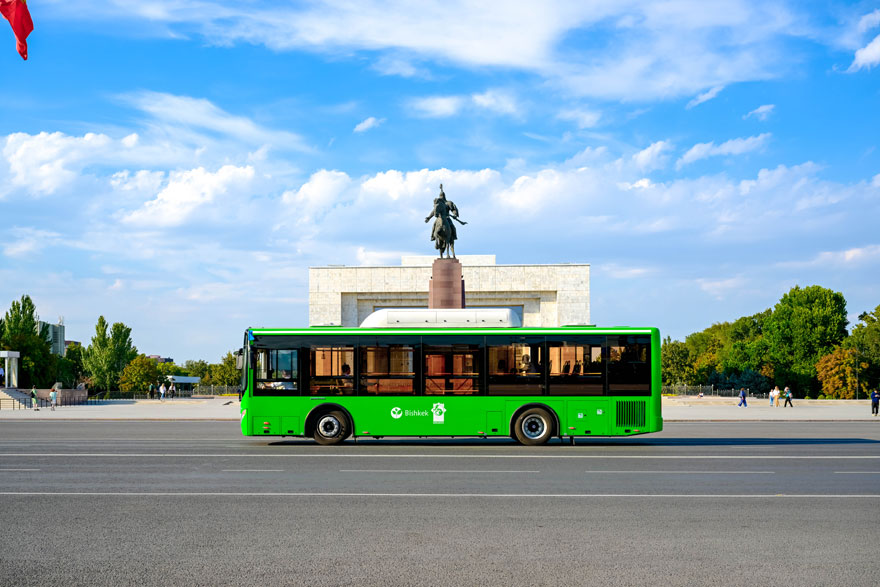
Ankai New Energy Buses Become Part of Daily Life in Bishkek, Kyrgyzstan
01 September 2026
In late August, midday temperatures in Bishkek, Kyrgyzstan, remain high. Citizen Ailat waits for a bus outside a downtown shopping mall. She lets several conventional buses pass before an electric bus finally pulls into the stop.
“I’m not in a hurry. I prefer to wait for an air‑conditioned bus—it’s much more comfortable,” she says.
The bus Ailat boards is one of 120 pure‑electric buses exported by China’s Ankai Bus to Bishkek. The city’s Electric and Gas Bus Service Center was officially inaugurated in August 2025, and from late September that year, the fleet was gradually put into service on public transport routes.
The bus Ailat boards is one of 120 pure‑electric buses exported by China’s Ankai Bus to Bishkek. The city’s Electric and Gas Bus Service Center was officially inaugurated in August 2025, and from late September that year, the fleet was gradually put into service on public transport routes.
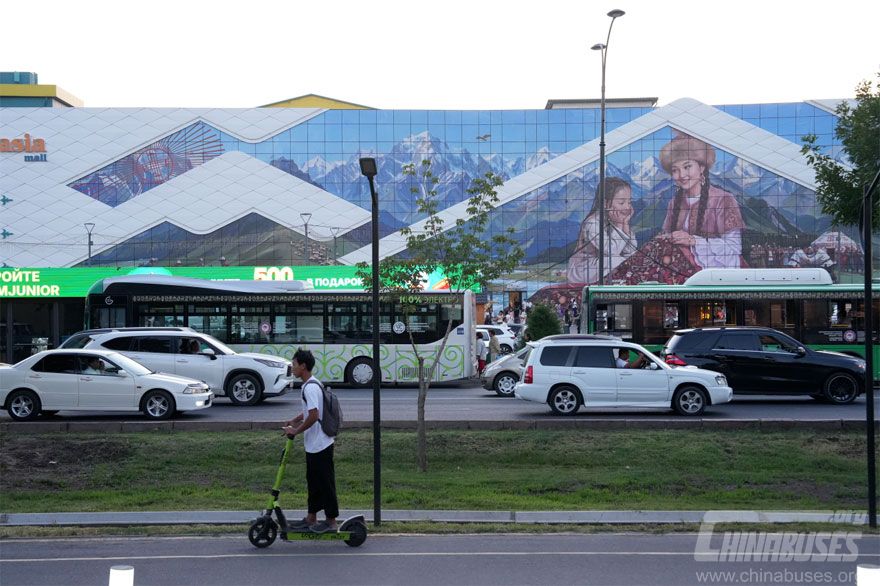
A new‑energy bus (left) and a gas‑powered bus (right) travel on a road in front of a shopping mall in Bishkek, Kyrgyzstan.
Compared with local gas‑powered buses, which have gas storage tanks mounted on their roofs, these new‑energy vehicles feature sleek, modern exteriors. Their bodies bear inscriptions and logos for the “Shanghai Cooperation Organisation Summit · Bishkek‑2026” in four languages: Kyrgyz, Chinese, Russian and English. Some of the buses will provide transport support during the summit.
Shipped from Hefei, China, to Bishkek, how have these new‑energy buses adapted to local road conditions and climate? How is their daily maintenance ensured? A reporter visited the Electric and Gas Bus Service Center for answers.
In the afternoon, several electric buses are neatly parked beside charging piles inside the spacious compound, recharging.
Belek Orozbekov, a driver with some 24 years of experience operating trolleybuses, now drives these catenary‑free new‑energy buses. He notes that a full charge generally supports a full day’s service.
“Previously, we were constrained by overhead wires and could hardly divert our routes in case of disruptions. Now we can reroute flexibly whenever needed,” he explains.
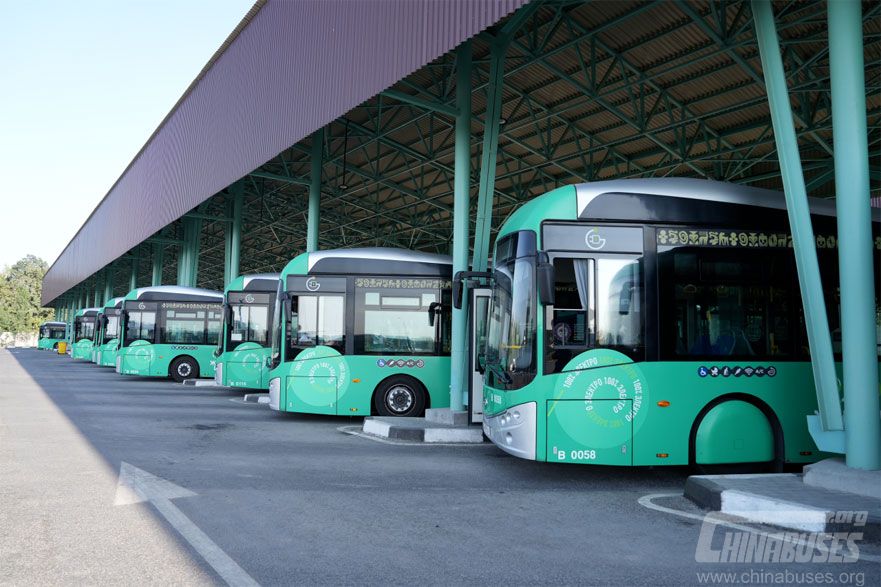 New‑energy buses charging at the service centre in Bishkek, Kyrgyzstan.
“When these electric buses first hit the roads, many local residents asked: trolleybuses also run on electricity, so why replace them?” says Knesh Torubayev, the Kyrgyz technical lead for the project. “At first we had to explain the differences. But as the vehicles went into operation, doubts faded. Passengers and drivers alike appreciate the comfortable cabin—warm in winter and cool in summer.”
Behind the smooth operation of the fleet lies a rotating on‑site Chinese technical team.
In August 2024, before vehicle deliveries, Zhang Yong, an overseas service staff member from Ankai Bus, arrived in Bishkek for the first time. He surveyed operational sites and made preparations for supporting infrastructure, including charging facilities and repair workshops.
Tailoring their work to local road conditions, climate and operational patterns, Zhang and his Chinese team carried out localised adjustments to vehicle control software to improve driving safety. After the fleet entered service, Chinese technicians continued with rotating on‑site assignments. Within the agreed technical‑service period, they provide driver training, fault troubleshooting and software upgrades.
Zhang Yong still vividly recalls this past Spring Festival. “It was the first winter after the buses were commissioned, and on‑site staff presence was essential,” he says. He stayed in Bishkek and, together with Kyrgyz technicians, set up special inspection and de‑icing procedures to counter risks posed by wet snow and ice to vehicle chassis and steering systems, ensuring reliable winter operations.
“Today our electric buses serve eight major public‑transport routes across Bishkek. I feel real pride seeing them travelling through the city streets,” Zhang Yong remarks.
Source : www.chinabuses.org
Editor : Lucy
Views:15523
Share :